
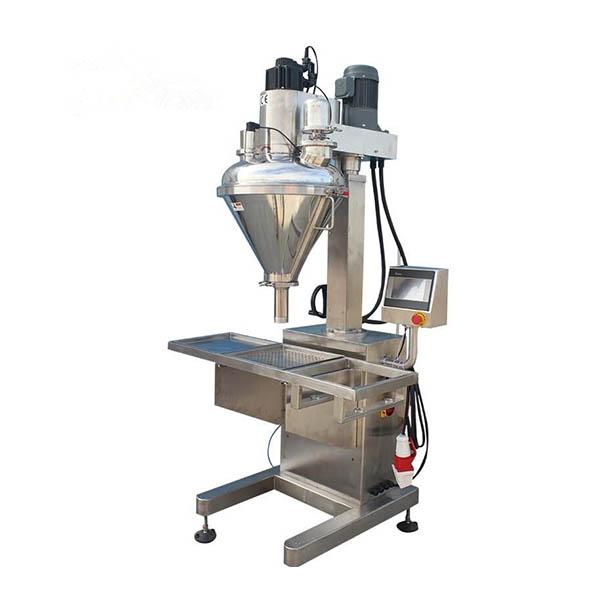
An Auger Filler is a machine that dispenses powders and granules with high accuracy. Many industries rely on this technology to fill products quickly and safely. The global market for auger fillers is growing fast, expected to reach $1.5 billion by 2033 with a 5.8% annual growth rate.
|
Benefit |
Description |
| Accuracy | Auger fillers provide consistent results, crucial for maintaining quality in filling processes. |
| Hygiene | The design of auger fillers helps maintain high standards of hygiene, especially in pharmaceuticals. |
| Efficiency | They can fill multiple containers simultaneously, speeding up production and reducing waste. |
| Flexibility | Capable of handling a variety of materials, from fine powders to coarse granules, without clogging. |
Advanced features and customization options make auger fillers essential in food, pharmaceutical, and chemical production.
Key Takeaways
- Auger fillers ensure high accuracy in dispensing powders and granules, crucial for maintaining product quality across food, pharmaceutical, and chemical industries.
- These machines enhance hygiene standards by using easy-to-clean materials, making them ideal for sensitive applications like pharmaceuticals.
- Auger fillers improve production efficiency by allowing simultaneous filling of multiple containers, significantly speeding up packaging processes.
- The versatility of auger fillers enables them to handle a wide range of materials, from fine powders to coarse granules, without clogging.
- Customization options allow businesses to tailor auger fillers to their specific needs, ensuring optimal performance and integration with existing production lines.
Auger Filler in Food Industry
Powder and Granule Products
Food manufacturers use auger fillers to package a wide range of products. These machines handle powders, granules, creams, pastes, and even some liquids. Common examples include spices, flour, protein powder, and baking powder. Auger fillers can also package coffee powder, matcha powder, cocoa powder, granulated sugar, and milk powder. This versatility makes them a popular choice for many food processing plants.
Packaging formats vary based on the product and market needs. Some of the most frequently used packaging types are:
- Pouches, including pillow pouches and individual sachets
- Stand-up pouches (SUPs)
- Classic bottles, boxes, and jars
- Shipping-optimized rigid and flexible containers
- Club-format and multipack containers
- Containers for film and shrink wrapping
Benefits for Food Packaging
Auger fillers offer several advantages for food packaging. They provide stable powder dosing, which ensures consistent and repeatable results. This reduces waste and helps companies meet weight regulations. The machines operate automatically, increasing production rates compared to manual filling. Their consistent accuracy, often within ±0.5 to 1%, minimizes overfilling and saves product.
|
Feature |
Benefit |
| Stable Powder Dosing | Reduces waste and ensures repeatable results |
| High Efficiency | Increases production rates |
| Consistent Accuracy | Minimizes overfilling and meets regulations |
| Enhanced Hygiene | Lowers contamination risks |
Efficient sanitation and maintenance are critical for food safety. Auger fillers are designed for easy cleaning and quick disassembly. This helps companies comply with hygiene standards, such as FDA and USDA regulations. Features like Clean-in-Place (CIP) capabilities make sanitation even easier.
Food Industry Cases
Many food companies rely on auger fillers for their daily operations. For example, wheat flour, spice powder, and whey protein powder are often packaged using these machines. Shanghai Tops-group auger fillers use servo motor control and dual filling modes to maintain high precision and speed. The stainless steel construction ensures durability and easy cleaning, which is important for food safety. These features help companies package products efficiently and safely.
Auger Filler in Pharmaceutical Industry
Compliance and Precision
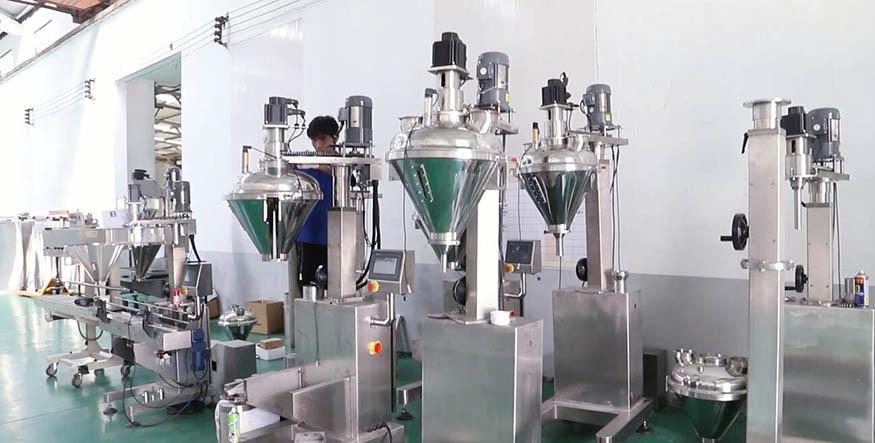
Pharmaceutical companies must follow strict rules to keep products safe and effective. Auger Filler machines play a key role in meeting these standards. They help ensure every package contains the right amount of medicine. Accurate dosing is important because even small mistakes can affect patient health.
Note: Cleanliness is critical in pharmaceutical production. Auger Filler systems use stainless steel or food-grade plastics for all parts that touch the product. This design makes cleaning easy and helps prevent contamination.
Regulatory requirements for pharmaceutical packaging include:
|
Regulatory Requirement |
Description |
| cGMP | Current Good Manufacturing Practices ensure quality in production. |
| 21 CFR Part 11 | Regulations for electronic records and signatures in pharmaceutical processes. |
Companies also need to:
- Follow Good Manufacturing Practices (GMP)
- Meet Schedule M requirements
- Validate their processes
- Keep detailed records
Advanced features like load cell weighing give real-time feedback for precise filling. Recipe management allows operators to switch between products quickly, reducing downtime and errors. A user-friendly touchscreen interface makes operation simple and efficient.
Pharma Product Types
Auger Filler machines handle many types of pharmaceutical powders and granules. These include:
|
Product Type |
Description |
| High-Precision Micro-Dose | Used for dispensing powders into bottles and jars, suitable for pharmaceuticals and nutraceuticals. |
| Semi-Automatic Auger Filler | Designed for precise dosing of fine and semi-fine powders, applicable in pharmaceuticals and food. |
Common packaging formats are:
- Bags
- Bottles
- Cans
Pharmaceutical, nutraceutical, cosmetic, and chemical products often use these machines for accurate and hygienic filling.
Pharma Industry Cases
Many pharmaceutical companies use Auger Filler technology to package antibiotics, vitamins, and protein supplements. Inline auger fillers are popular for powdered medications because they deliver consistent doses. The closed system design keeps the product safe from outside contamination. Features like online weighing and recipe management help companies meet strict industry standards and improve efficiency.
Auger Filler in Chemical Industry
Powder and Granule Handling
Chemical manufacturers often need to package powders and granules with care. Auger Filler machines help measure and fill these materials accurately. This technology is ideal for products like industrial household cleaning powders, laundry detergents, and dishwashing detergents. The table below shows some common types of powders and granules handled in the chemical industry:
|
Type of Powder/Granule |
Application |
| Industrial Household Cleaning Powders | Filling with Auger Fillers |
| Laundry Detergents | Filling with Auger Fillers |
| Dishwashing Detergents | Filling with Auger Fillers |
Powders are best measured with auger fillers. Granules can also be handled, but sometimes require different weighing systems for larger sizes.
Safety and Efficiency
Safety is a top priority in chemical packaging. Auger Filler machines include features that protect both workers and products. These machines often use dust-free operation to prevent airborne powder contamination. Sealed filling systems keep harmful substances contained and reduce exposure. Some designs include self-sealing mechanisms to prevent spills.
|
Safety Feature |
Description |
| Dust-Free Operation | Prevents airborne powder contamination, ensuring a clean environment. |
| Sealed Filling Systems | Protects against airborne contamination and reduces exposure to harmful substances. |
| Mechanisms to Reduce Exposure | Designed to minimize worker contact with hazardous materials. |
Efficient operation is also important. Precise powder dosing ensures each container gets the right amount. This accuracy helps companies avoid costly overfilling, which can lead to large financial losses each year. The right system design supports both safety and efficiency.
Chemical Industry Cases
Many chemical plants use auger fillers for their reliability and flexibility. These machines can be customized for different products and harsh environments. Stainless steel construction provides corrosion resistance and strength. Plastic composites offer chemical and abrasion resistance, making cleaning easier and reducing wear. Customization options allow companies to match the machine to their specific needs, ensuring product purity and compliance with industry standards.
Auger Filler Advantages
Accuracy and Consistency
Precision is a key advantage of auger fillers. These machines use advanced technology, such as servo motors, to control the filling process. Servo motors allow for exact rotational positioning, which means each fill is accurate and repeatable. This is important for industries that need to meet strict quality standards.
The following table compares the typical accuracy rates of different filling technologies:
|
Filling Technology |
Typical Accuracy Rate |
| Auger Fillers | ±1-3g |
| Multihead Weighers | ±0.5-2g |
| Cup Fillers | ±2-5g |
Consistency in fill weights is also important. Auger fillers maintain this consistency by controlling several factors, such as auger speed, product bulk density, and environmental conditions. Regular inspection and maintenance help keep the machine working at its best.
|
Factor |
Description |
| Product Bulk Density Variability | Changes in temperature, humidity, and storage conditions can alter bulk density, affecting fill weights. |
| Auger Speed and Fill Rate | High RPM can aerate powder, reducing density; slower speeds improve consistency but lower throughput. |
| Wear and Tooling Condition | Worn auger flights can lead to inaccurate fills; regular inspection and replacement are necessary. |
| Environmental Conditions | Factors like vibration, container alignment, and humidity can cause fill variance. |
Tip: Using a load cell weighing system can further improve accuracy by measuring the fill weight in real time.
Versatility and Customization
Auger fillers are known for their ability to handle a wide range of products. They can fill powders, granules, and even some pastes. The integration of servo motors makes it possible to adjust the filling process for different product types and packaging sizes. This technology ensures that the machine can handle products with different bulk densities and flow characteristics.
|
Feature |
Benefit |
| Servo Direct-Drive Design | Provides smooth, repeatable filling cycles for various powder types. |
| Reduction of Wear Parts | Eliminates over 30 wear parts, reducing maintenance and downtime. |
| Enhanced Accuracy and Productivity | Improves efficiency in dry product filling lines, accommodating diverse powder characteristics. |
Customization options allow companies to choose the best cutoff method for their product. The table below shows some common options:
|
Cutoff Method |
Description |
Suitable Products |
| Short Auger with a Spinner Plate | Utilizes the angle of repose to achieve clean cut-offs without complex technology. | Granulated free-flowing products like instant coffee, dry yeast, and granular sugar. |
| Long Auger with Drip Washer or Sieve | Creates back pressure to prevent dribble, suitable for non-free-flowing powders. | Whole milk powder, flour, ground coffee, and cake mix. |
| Long Auger with Clamshell Closure | Mechanically retains product during filling cycles, ideal for severe angles of repose. | Free-flowing powders such as spices, cement, and tea. |
| Product Compression Unit | Reduces dust and improves handling, can be combined with other methods. | Free-flowing powders for air removal. |
Many manufacturers, such as Shanghai Tops-group, offer branding and integration options. Companies can add their own design to the machine label or connect the auger filler to other packaging equipment. This flexibility helps businesses meet their unique needs.
- Exact rotational positioning for accurate dose delivery
- Fill accuracy within ±0.5-2% of target weight
- Consistent dosing across a wide weight range from grams to kilograms
- Effective handling of cohesive and poor-flowing powders
- Minimal product degradation during the filling process
Cost-Effectiveness
Auger fillers provide significant cost savings over time. While the initial investment may be higher than manual or alternative methods, the long-term benefits are clear. These machines reduce product wastage and maintenance costs, which leads to lower operating expenses.
|
Aspect |
Auger Fillers |
Manual/Alternative Methods |
| Initial Investment | Higher initial cost | Lower initial cost |
| Long-term Savings | Significant savings due to reduced wastage and maintenance | Higher wastage and maintenance costs |
| Efficiency | Increased throughput | Slower filling rates |
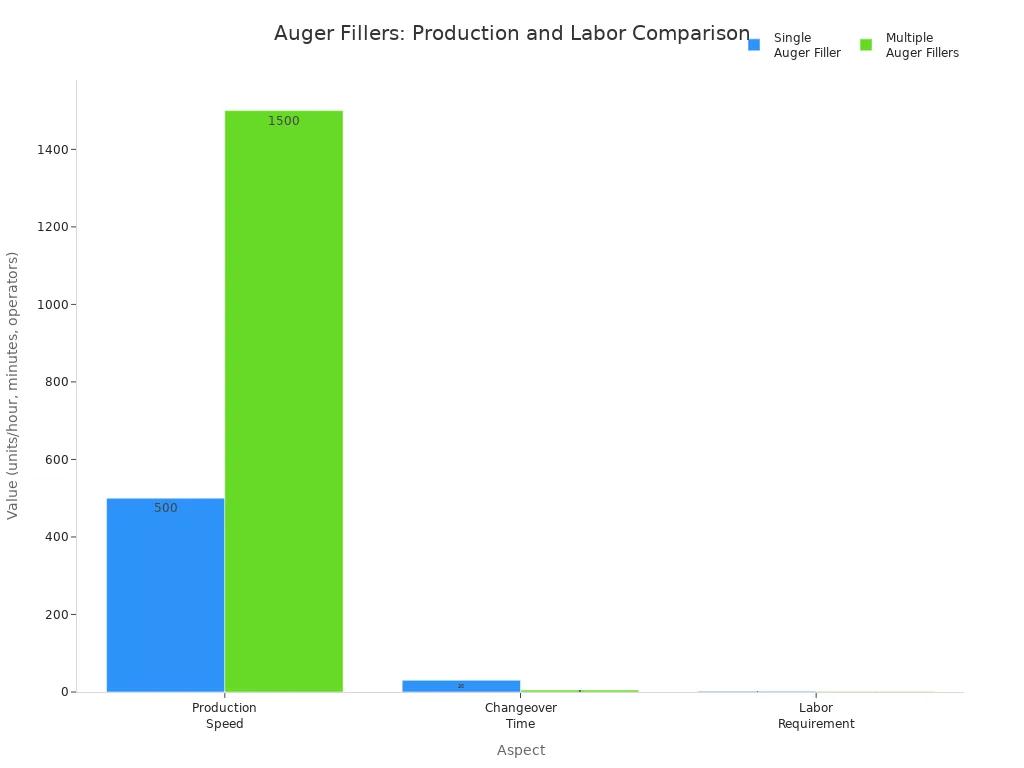
Production speed and labor costs also improve with auger fillers. The table below shows how using single or multiple auger fillers can impact production:
|
Aspect |
Single Auger Filler |
Multiple Auger Fillers |
| Production Speed | 500 units/hour | 1500 units/hour |
| Changeover Time | 30 minutes | 5 minutes |
| Labor Requirement | 2 operators | 1 operator |
According to a study by the Institute of Packaging Professionals, if companies deploy two or more fillers working together, they could see filling speeds go up by as much as 40%.
Quick production time is another advantage. Many suppliers can deliver standard auger fillers in as little as seven days. This helps companies start or expand their packaging lines without long delays.
Comparing Filling Technologies
Auger vs. Volumetric
Auger fillers and volumetric fillers both serve the purpose of dispensing powders and granules. However, they work in different ways. Auger fillers use a rotating screw to move product into containers. This method gives better control over the amount of product dispensed. Volumetric fillers rely on a fixed volume, such as a cup or chamber, to measure each dose.
Auger fillers offer several advantages:
- They handle a wide range of powder types, including those with poor flow.
- They provide more consistent fills, especially when product density changes.
- They allow for easy adjustment of fill weights without changing hardware.
Volumetric fillers work best with free-flowing products that do not change density. When the product is light or fluffy, volumetric fillers can become less accurate. Auger fillers maintain accuracy even when the product varies in texture or density.
Tip: For products like protein powder or spices, auger fillers often deliver more reliable results than volumetric systems.
Auger vs. Gravimetric
Gravimetric fillers use weight to measure each fill. This method gives very high accuracy, especially for expensive or sensitive products. Auger fillers, while accurate, measure by volume or auger rotation, not by weight.
The table below compares these two technologies:
|
Technology Type |
Accuracy |
Efficiency |
Use Cases |
| Auger Fillers | Moderate | High for powders | Cosmetics, chemicals, inconsistent flow |
| Gravimetric Fillers | High (pinpoint) | Ideal for high-value products | Pharmaceuticals, costly cosmetics, powdered supplements |
- Gravimetric fillers provide higher precision by weighing the product during filling.
- They are expected to capture a significant share of the market, with an estimated 35% by 2025.
Auger fillers excel in speed and efficiency for most powders. Gravimetric fillers are chosen when accuracy is the top priority, such as in pharmaceutical or high-value supplement packaging.
Choosing an Auger Filler
Key Selection Factors
Selecting the right Auger Filler for your operation requires careful thought. Each industry has unique needs. Here are important factors to consider:
- Product type: Make sure the machine can handle your specific powder, granule, or paste.
- Production capacity: Check if the filler can meet your daily or hourly output goals.
- Industry requirements: Some industries, like pharmaceuticals, have strict rules for hygiene and accuracy.
- Filling range: Choose a machine that matches the weight range of your products.
- Intended use: Decide if you need the filler for powders, creams, or liquids.
- Speed and accuracy: Look for models that balance fast operation with precise dosing.
- Hygiene: Stainless steel frames and easy-to-clean parts help maintain cleanliness.
- Integration: Consider if the filler can connect with other machines in your packaging line.
- Extra features: Adjustable pads and user-friendly controls can improve efficiency.
Tip: Always match the filler’s features to your product and production needs. This helps ensure smooth operation and high-quality results.
Customization Options
Manufacturers like Shanghai Tops-group offer many ways to customize your auger filling machine. Customization helps you get the best fit for your business. The table below shows some options you might find useful:
|
Feature |
Description |
| Multi-language interface | Customizable touch screen interface in various languages to meet user requirements. |
| Adaptability with different equipment | Can be assembled with various machines to create new working modes for diverse production needs. |
| High-quality materials | Durable construction materials that ensure ease of cleaning and longevity of the machine. |
You can also request branding on the machine label. This makes your equipment stand out and supports your company’s image. Customization ensures that the Auger Filler works well with your products and fits into your existing production line.
Auger fillers offer precise, efficient, and hygienic solutions for many industries. Food, pharmaceutical, and chemical companies benefit from their flexibility and accuracy. These machines handle a wide range of products and packaging types.
- Explore your product needs.
- Compare machine features.
- Consult with trusted suppliers for custom solutions.
Choosing the right auger filler can improve your production and help your business grow.
FAQ
What products can auger fillers handle?
Auger fillers work with powders, granules, and some pastes. Common products include spices, flour, protein powder, detergents, and pharmaceutical powders. They suit both free-flowing and non-free-flowing materials.
How do I clean an auger filler?
Most auger fillers use stainless steel parts for easy cleaning. Many models allow quick disassembly. Some machines offer Clean-in-Place (CIP) features, which help maintain hygiene standards in food and pharmaceutical production.
Can I customize an auger filler for my needs?
Yes! Manufacturers like Shanghai Tops-group offer customization. You can request special features, branding, or integration with other equipment. Customization ensures the machine fits your product and production line.
Which industries benefit most from auger fillers?
|
Industry |
Typical Use Cases |
| Food | Spices, flour, protein |
| Pharmaceutical | Powders, supplements |
| Chemical | Detergents, cleaners |
These industries value accuracy, hygiene, and efficiency.
Post time: Mar-02-2026