
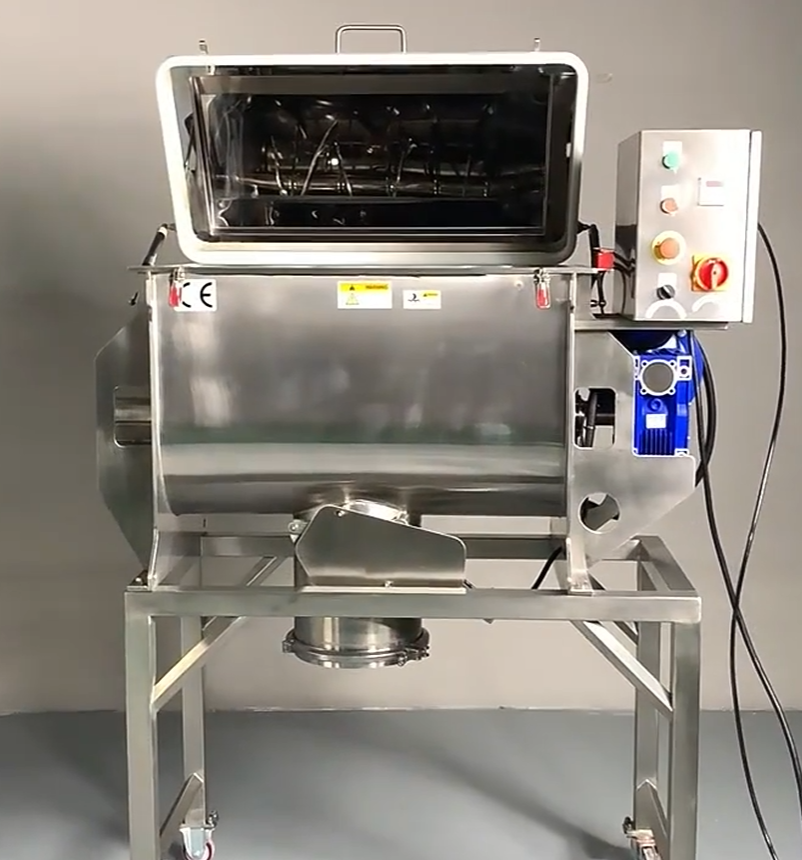
When selecting mixing equipment for powders, granules, and slurries, horizontal ribbon mixers and vertical mixers are two of the most common choices. Many users ask: which one is better? The answer is that there is no absolute “better” or “worse”—it simply depends on suitability.
I. Comparison of Structure and Operating Principles
The horizontal ribbon mixer features a U-shaped horizontal vessel that occupies significant lateral space. Its mixing mechanism consists of either double-layer (inner and outer) or single-layer ribbons mounted on a horizontal main shaft. As the ribbons rotate, they push material from the ends toward the center (or vice versa), creating a combined convective and shearing motion. The material undergoes dynamic circulation—tumbling vertically and flowing axially—resulting in intense mixing. These mixers feature a full-length discharge outlet at the bottom equipped with a pneumatic or manual valve; material discharges via gravity, assisted by the rotating ribbons pushing it toward the outlet, ensuring rapid and smooth discharge.
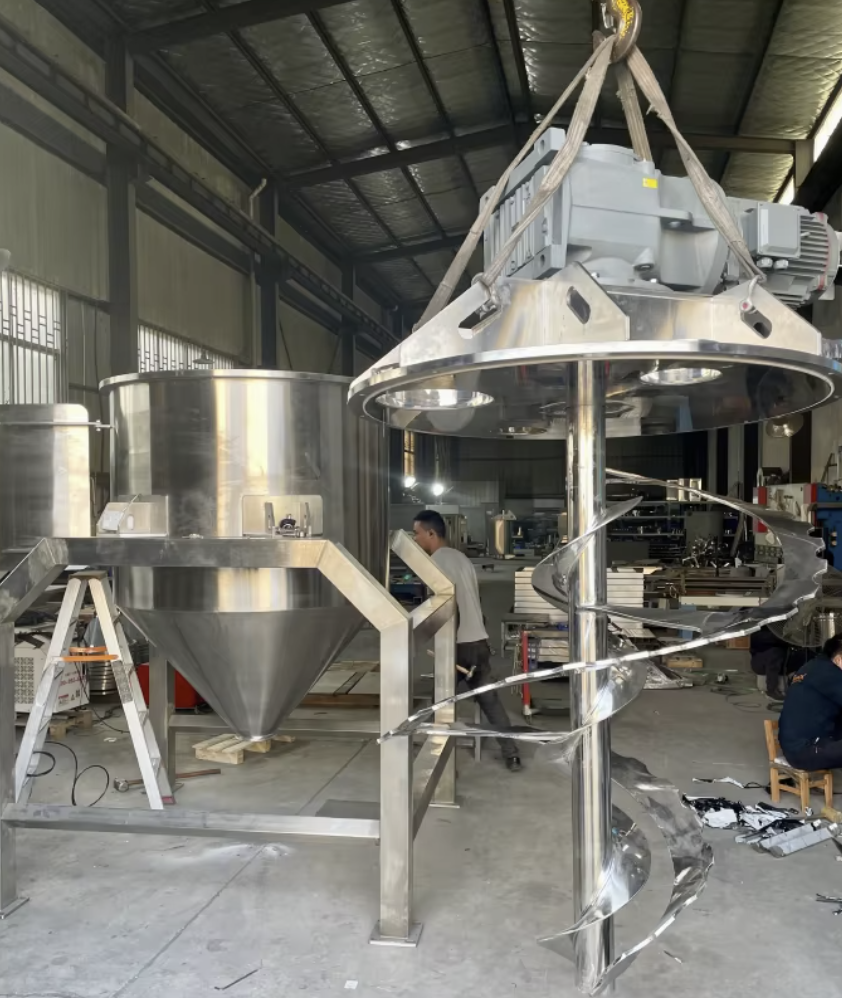
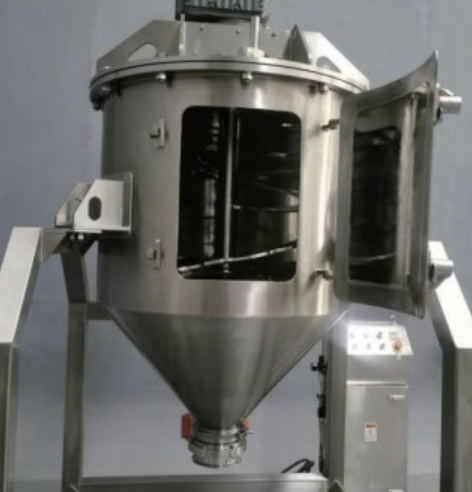
In contrast, the vertical mixer features a cylindrical vessel positioned vertically; while it has a relatively small footprint, it requires greater ceiling height. Its mixing mechanism typically consists of single- or double-layer spiral lifting blades mounted on a vertical main shaft. As the spiral blades rotate, they lift material from the bottom to the top, where it cascades outward and downward, creating a predominantly convective vertical circulation pattern with a relatively gentle mixing action. The discharge outlet is located at the bottom or lower side, with material primarily discharging via gravity flow.
II. Differences in Suitable Materials and Applications
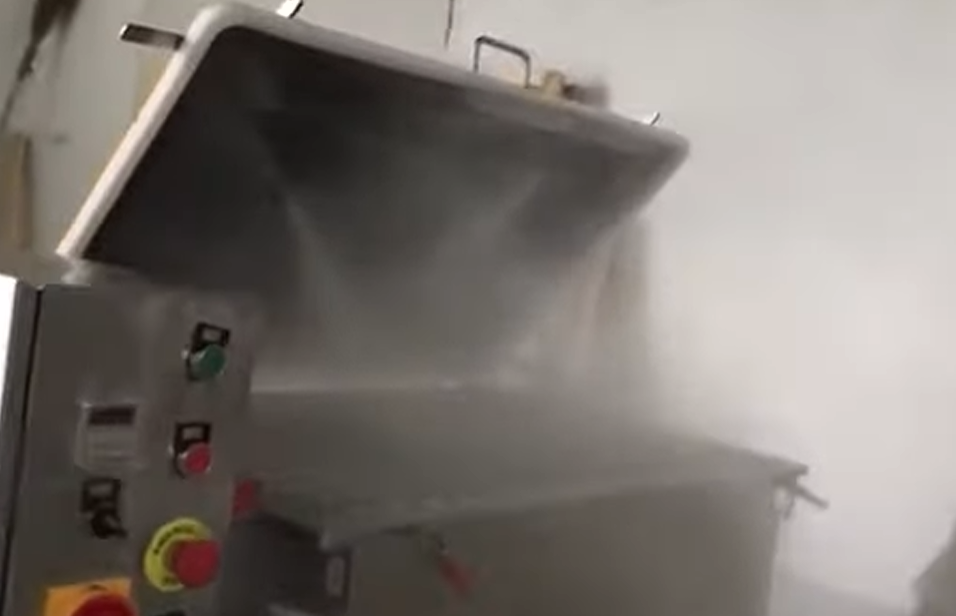
Horizontal ribbon mixers offer broader material adaptability, effectively handling everything from free-flowing powders and granules to materials with poor flowability or a tendency to clump. They can also be equipped with liquid spray systems for liquid-solid mixing, making them suitable for processes requiring the addition of binders, oils, pigments, or other liquid components; they are widely used in industries such as food, pharmaceuticals, chemicals, animal feed, and construction materials.
By comparison, vertical mixers are primarily suited for powders and granules and require the material to possess a certain degree of flowability. When handling material combinations with significant differences in specific gravity, vertical mixers are prone to stratification during the mixing process. Modifying vertical mixers to incorporate liquid addition is challenging; sprayed liquids tend to cause clumping, making it difficult to ensure uniform mixing.
III. Comparison of Cleaning and Maintenance
To meet the strict hygiene standards of the food and pharmaceutical industries, horizontal mixers can be equipped with Clean-in-Place (CIP) systems, significantly reducing the manual cleaning workload. Maintenance focuses primarily on the shaft seals, where material residue may accumulate, necessitating regular inspection and seal replacement.
It is recommended to clearly define your material characteristics, process requirements, and cleanliness standards before selecting equipment to ensure the most suitable choice.
Post time: Aug-28-2026