
In powder processing, mixing two powders may appear simple, but achieving a uniform and stable mixture requires careful consideration of particle properties, mechanical energy, and process conditions.
Unlike liquids, powders do not naturally diffuse at the molecular level. Their mixing depends on external forces generated by mixing equipment. At the same time, mixing and segregation occur simultaneously, meaning that an improper mixing method or excessive mechanical stress may cause the mixture to separate again.
Therefore, how to mix two powders is essentially an engineering problem involving powder characteristics, mixing mechanisms, equipment selection, and process control.
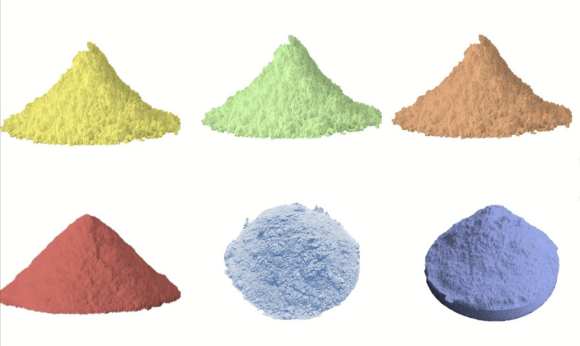
I. The Physical Basis of Binary Mixing: Three Mechanisms and One Key Resistance
1.1 Three Basic Mechanisms of Mixing
Powder mixing is achieved through three main mechanisms: convection, shear, and diffusion.
Convective mixing is responsible for large-scale particle movement. It rapidly distributes different powders throughout the mixing chamber and dominates the early stage of mixing.
Shear mixing occurs when powder layers move at different speeds. The resulting friction and stretching forces help break agglomerates and improve particle dispersion.
Diffusion mixing refers to the gradual redistribution of individual particles through random movement and collisions. Although slower than convection and shear, it determines the final mixing uniformity.
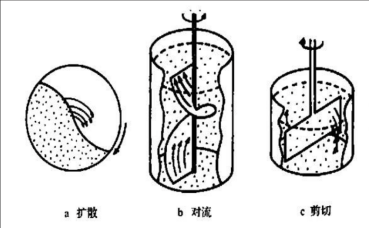
For example, in a V-type mixer, convection dominates the initial mixing stage, while diffusion gradually improves particle-level uniformity. Understanding these mechanisms helps determine the appropriate mixing time and equipment type.
1.2 The First Resistance to Mixing: Powder Structure
Before mixing begins, powders often form a stable structure due to friction, particle interlocking, and cohesive forces. This structure restricts particle movement and prevents effective mixing.
A suitable amount of free space is therefore necessary for powder circulation. This is why most powder mixers operate with a filling ratio of approximately 30%–60%. Excessive filling reduces particle movement and decreases mixing efficiency.
II. Evaluating Powder Properties Before Mixing
The first step in selecting a mixing method is understanding the physical properties of the two powders.
Particle Size Distribution
A large difference in particle size increases the risk of segregation. Fine particles may fill the gaps between larger particles, while vibration or material flow may cause separation after mixing.
Density Difference
When two powders have significantly different densities, heavier particles tend to move downward while lighter particles migrate upward. In such cases, stronger mixing forces are required to maintain uniformity.
Flowability
Powders with poor flowability usually require forced mixing action. Parameters such as angle of repose and compressibility can help evaluate powder movement behavior.
Agglomeration Tendency
Fine powders, especially those containing moisture, fats, or cohesive components, may form agglomerates. These materials often require stronger shear forces to achieve proper dispersion.
III. Selecting the Right Mixing Equipment
The suitable mixer depends mainly on the difference between the two powders and the required mixing quality.
Similar Density and Good Flowability
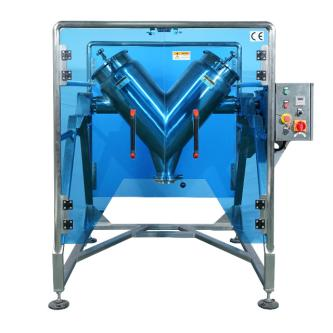
For powders with similar physical properties and a requirement to maintain particle integrity, gentle mixing equipment such as V-type mixers or double-cone mixers is suitable.
These mixers mainly rely on diffusion and gentle convection, providing uniform mixing while minimizing particle damage.
Large Density Difference or Poor Flowability
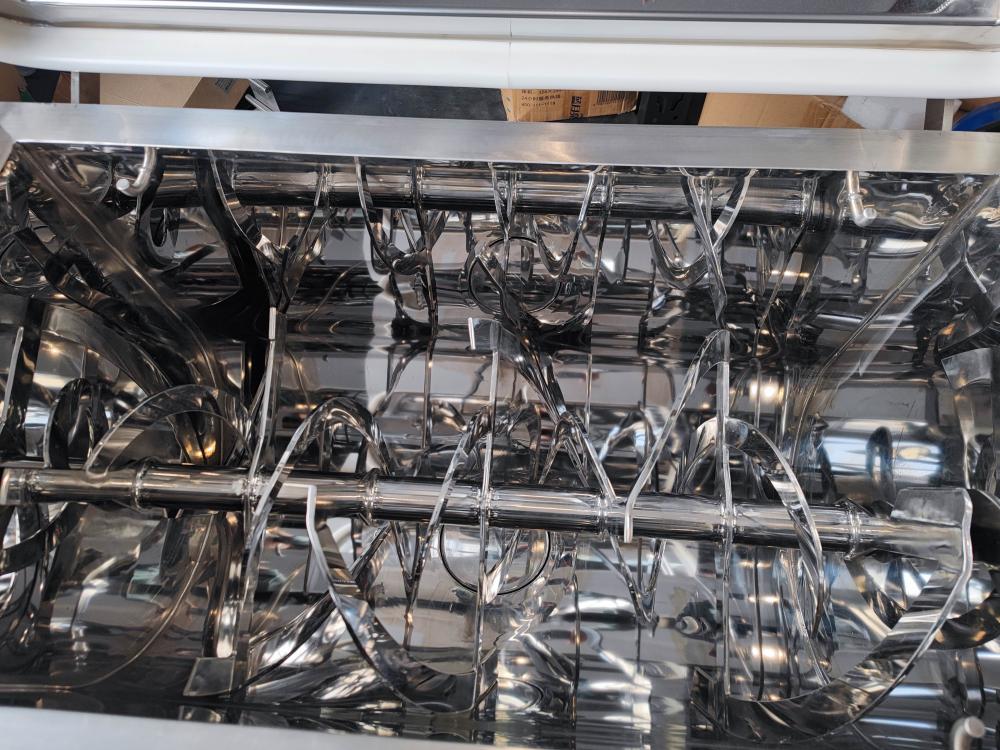
When powders have significant differences in density, flowability, or agglomeration tendency, stronger mixing forces are required.
Equipment such as ribbon mixers or plow mixers provides forced convection and shear action, improving dispersion efficiency and reducing mixing time.
Extreme Differences in Particle Size or Density
For powders with severe segregation problems, conventional mixing methods may not be sufficient. Additional strategies, such as special mixing technologies, optimized feeding methods, or process adjustments, may be required to maintain mixture stability.
Post time: Jul-21-2026