
The ribbon mixer is one of the most widely used mixing devices for powders and granular materials in the industrial sector. Thanks to its simple structure, strong adaptability, and high cost-effectiveness, it has been a workhorse in industries such as food, pharmaceuticals, chemicals, and plastics for decades. Understanding its main components and how they work together helps explain why it has remained so enduringly popular.
I. U-Shaped Trough
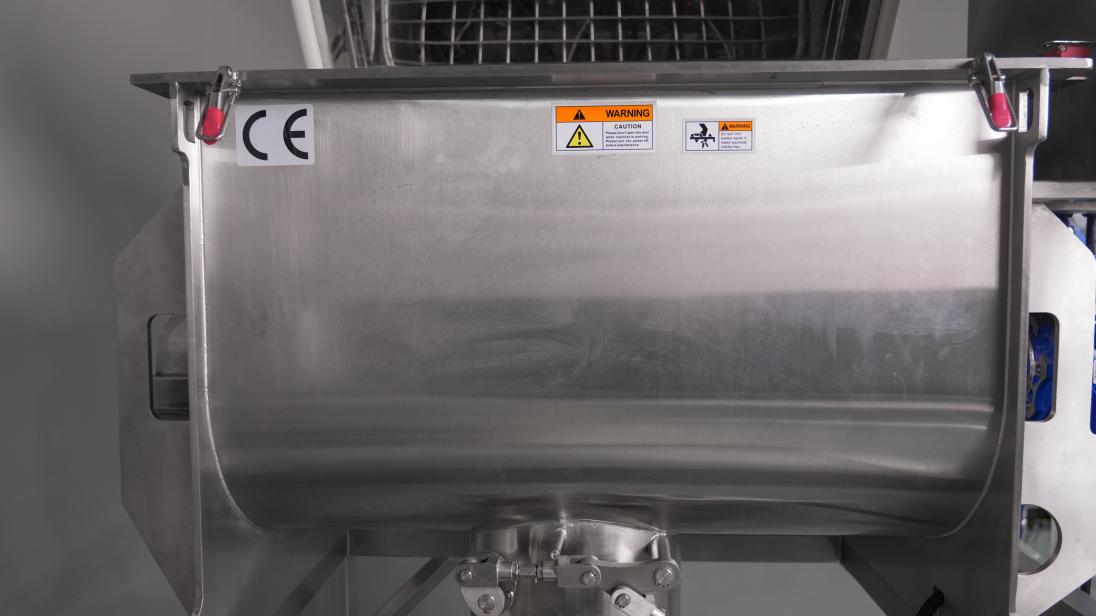
The most conspicuous component is the slender, horizontal, U-shaped trough, which holds the material and serves as the stage where the mixing action takes place. The curved bottom allows the outer ribbon blades to sweep close to the trough walls, preventing material buildup in dead corners. The trough is typically made of stainless steel; for food and pharmaceutical applications, 304 or 316L grades are commonly selected, and sanitary-grade requirements mandate that welds be ground and polished. The top cover is more than just a lid; modern equipment uses a heavy-duty, sealed cover to suppress dust and protect operators. It is sometimes used for vacuum or pressurized operation and is equipped with a safety interlock that cuts off power if the cover is opened during operation.
II. Ribbon Agitator
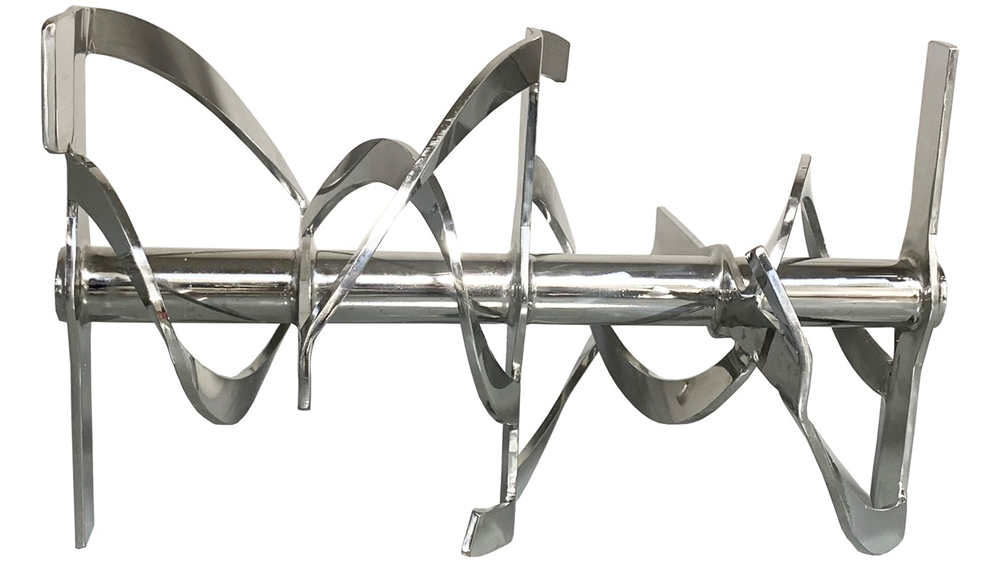
The mixing action is generated by the agitator—a horizontal shaft that drives helical ribbon to rotate. A standard agitator consists of two sets of ribbon, inner and outer, with opposite helical directions: the outer ribbon push the material from both ends toward the center, while the inner ribbon push it back from the center to both ends. This counter-current flow creates continuous folding and circulation, combined with radial movement, resulting in what is known as “three-dimensional mixing.”
The most critical design parameter is the clearance between the outer auger flights and the tank wall, which in high-quality equipment is typically maintained within 3 to 6 millimeters. If the clearance is too large, unmixed material will remain at the bottom of the tank; if the clearance is appropriate, material near the tank wall will be continuously drawn into the mixing zone. The auger flights rotate at a low speed, allowing for gentle handling of fragile materials; mixing dry powders typically takes only 5 to 15 minutes.
III. Drive System: Power and Control
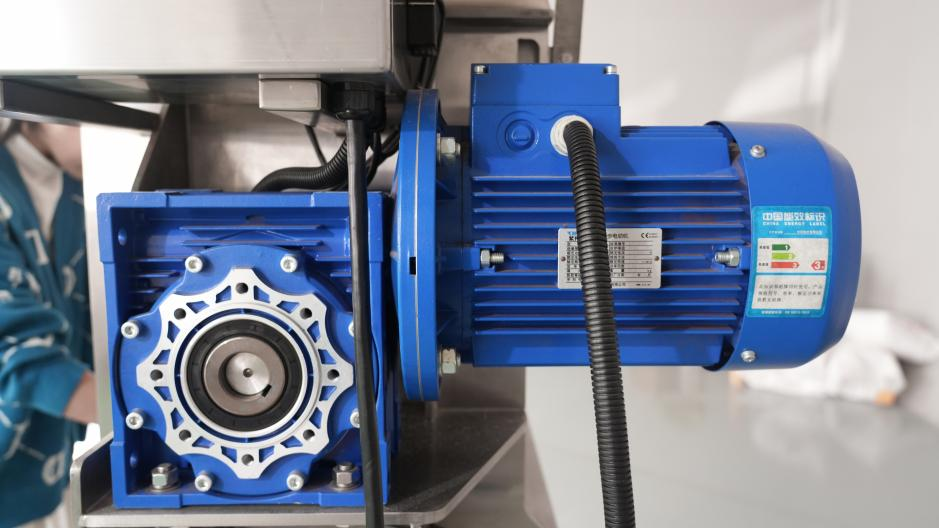
The mixer is powered by a drive system consisting of a motor and a gear reducer. Selection must be tailored to the application: using a light-duty model designed for flour to mix dense materials will overload the motor. Power requirements depend on batch weight and bulk density. Modern equipment predominantly uses direct-coupled gear motors, which require minimal maintenance and offer high efficiency; variable-frequency drives are becoming increasingly common, allowing for fine-tuning of rotational speed to accommodate different formulations.
IV. Discharge Valve
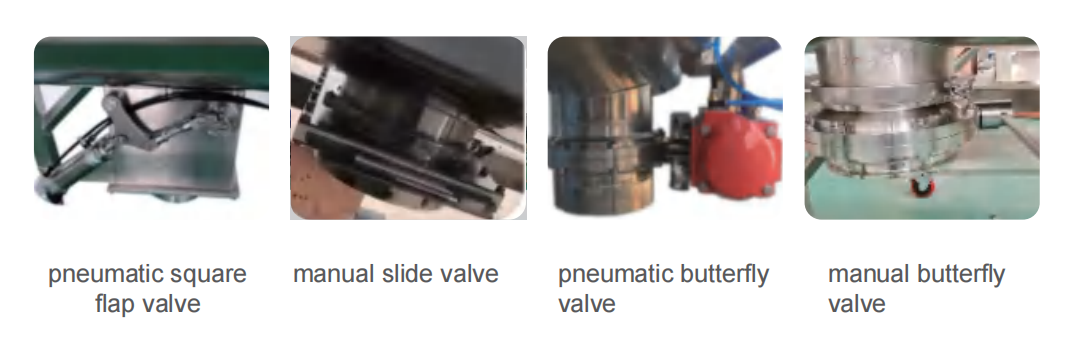
Most ribbon mixers discharge through a central opening at the bottom of the mixing trough, taking advantage of the outer ribbons’ natural tendency to push the material toward the center. There are various types of discharge valves: knife gate valves are suitable for dry powders and granules and provide a dust-tight seal when closed; butterfly valves offer finer control and are suitable for slightly sticky materials; for sanitary applications, spherical disc valves are used to minimize dead zones and facilitate cleaning. Full-length bottom discharge allows for nearly complete emptying but involves a more complex and expensive design.
V.Seals and Bearings: Protecting the Equipment
The point where the mixing shaft passes through the hopper wall is a potential pathway for dust escape and contamination ingress. Standard equipment typically uses packing seals, but fine or abrasive powders can penetrate the stuffing box and wear down the shaft. In such cases, an air-blow seal is recommended—compressed air is introduced into the cavity around the shaft to create positive pressure, blocking the entry of particles. The mixing shaft is supported by external bearings at both ends, isolating it from the product zone, which prevents contamination and facilitates maintenance.
Post time: Sep-23-2026