
In powder processing industries including meal replacement food, nutritional powder, pharmaceuticals, chemicals and building materials, the mixing process of all dry powders and granules fundamentally relies on three basic mixing mechanisms: convective mixing, shear mixing and diffusive mixing.
No single mixer operates solely on one mechanism. Instead, each equipment features a dominant mixing mechanism, suited for distinct materials and capable of solving different production pain points. Common defects such as powder segregation, uneven blending, agglomeration and residual dead corners mostly stem from a mismatch between material properties and the mixer’s primary mixing mechanism.
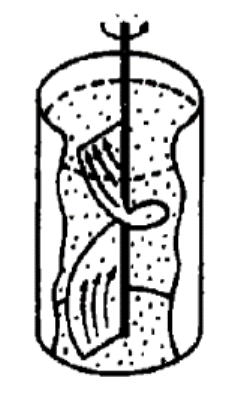
1. Convective Mixing: Mass Homogenization via Overall Material Circulation
Core Definition
Convective mixing is the most fundamental and efficient macro-scale mixing method for powders. Driven by mechanical components, large batches of materials undergo integral displacement and cyclic flow, enabling rapid position exchange of powders from different zones to achieve overall homogeneity.
Working Principle
The agitator drives bulk materials inside the cylinder to tumble and transfer in continuous streams and layers. Powders accumulated on the left, right, top and bottom sides intersect and merge rapidly under forced convection, completing macro-uniform blending of the whole batch within a short time, which addresses poor overall mixing of large-volume materials.
Applicable Materials & Characteristics
Convective mixing delivers strong agitation and high throughput, ideal for mass production and overall homogenization of standard dry powders and granules, such as grain flours, bakery premixes, feed powders and general industrial chemical powders.
However, it has obvious limitations: it cannot break micro-agglomerates or handle powders with drastically different densities of light and heavy fractions. Pure convective mixing often results in “macroscopically uniform yet microscopically inconsistent” blends, prone to re-segregation after static settling.
Representative Equipment
Horizontal ribbon mixers and vertical convective mixers, the mainstream equipment for industrial mass powder production.
2. Shear Mixing: Refining & Disintegrating Agglomerated High-Oil Powders
Core Definition
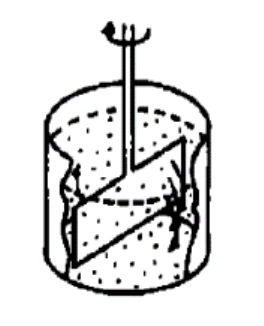
Shear mixing is a micro-precision mixing method. Relative sliding, compression and tearing forces generated between material particles, and between materials and agitator blades break apart powder lumps and agglomerates.
Working Principle
During operation, different powder layers move at varying speeds. Friction and shear occur between fast-moving and slow-moving layers, forcibly splitting and refining clustered or sticky powder particles. Minor additives and fine powders trapped in agglomerates are fully dispersed throughout the base material.
Applicable Materials & Characteristics
This mechanism is tailored for high-oil, slightly cohesive and easily agglomerated powders, including compound nutritional powders with microencapsulated fat powder, high-oil meal replacement blends, and slightly hygroscopic, clumping food additives.
Shear mixing prioritizes refinement, de-agglomeration and homogenization over rapid bulk tumbling. It resolves micro-clustering issues that pure convection cannot fix, yielding smooth blends free of particle clumps and localized additive enrichment.
Representative Equipment
Double paddle gravity-free mixers and ploughshare mixers, which rely on powerful shear force for refined dry blending.
3. Diffusive Mixing: Micro-Permeation Blending for High-Precision Minor-Component Formulations
Core Definition
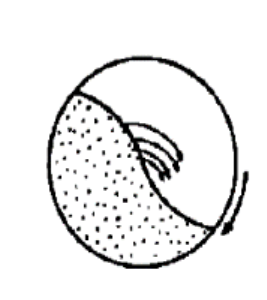
Diffusive mixing delivers the highest blending precision at the micro level. Materials are continuously tossed and tumbled, allowing individual powder particles to permeate and intersperse randomly for ultra-precise proportional blending.
Working Principle
The entire cylinder rotates and flips, lifting and scattering materials repeatedly. Without forced compression or vigorous pushing, powder particles diffuse freely by gravity. Minor additive particles evenly penetrate gaps between base material granules, thoroughly eliminating segregation of light and heavy powders and inconsistent micro-dosing.
Applicable Materials & Characteristics
Suited for small-batch, high-value powders requiring exceptional blending accuracy, such as vitamin powders, pharmaceutical excipients, trace food additives and premium nutritional blends.
Diffusive mixing operates gently without damaging particle morphology. It generates minimal dust and leaves little residual material, achieving superior homogeneity. Its major downside is low mixing speed, making it unsuitable for large-scale continuous production.
Representative Equipment
V-type mixers and three-dimensional motion mixers, core devices for laboratory trials and high-end precision powder blending.
4. Core Differences & Equipment Selection Logic for the Three Mixing Mechanisms
A concise industry-oriented summary for quick differentiation:
Convective mixing: Fast throughput, large batch size, macro homogeneity; for standard powder mass production to solve insufficient overall blending.
Shear mixing: Fine dispersion, de-agglomeration performance; for high-oil cohesive powders to eliminate particle clumps and micro non-uniformity.
Diffusive mixing: Ultra-precise, gentle agitation, anti-segregation performance; for minor high-value powder batches to resolve density segregation and inaccurate micro-dosing.
Industrial powder blending always combines convective, shear and diffusive effects simultaneously, with only one mechanism playing the dominant role.
Mass production of standard food and chemical dry powders: Convection as primary, diffusion as auxiliary.
High-oil, easily agglomerated powders: Shear as core, convection as support.
Premium micro-dosed pharmaceutical and nutritional powders: Diffusion takes precedence to guarantee segregation-free high-precision blending.
A full grasp of these three mixing mechanisms helps manufacturers avoid common production defects including powder segregation, caking, inconsistent blending and cross-contamination from residual material. Matching the correct mixer to material properties enables dry powder production with minimal segregation and superior mixing uniformity.
Post time: Jun-27-2026