
A dry powder mixer is widely used in the cosmetics, pharmaceutical, and food industries. It is mainly designed for the uniform mixing of two or more types of powders or granules. With increasing demands for product quality and consistency, dry powder mixers have become increasingly important in modern manufacturing systems.
The core function of a dry powder mixer is to blend materials uniformly. This is achieved through mechanical action, which distributes particles of different sizes and densities evenly at both the macroscopic and microscopic levels. According to their structure and working principles, dry powder mixers can be divided into several types. For example:
● Ribbon mixer: By utilizing the opposing forces generated by double ribbons, materials are driven to circulate throughout the system at low speeds, achieving gentle yet efficient mixing.
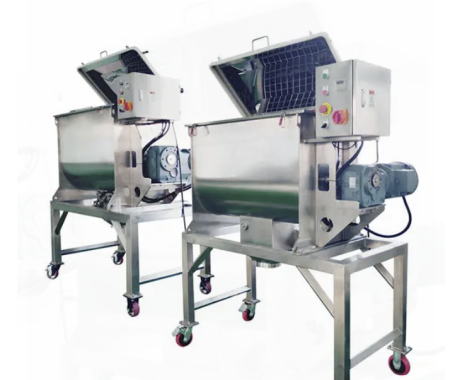
● Single shaft paddle mixer: Driven by a rapidly rotating shaft, the powder is subjected to three simultaneous forces—tossing, convection, and shear—resulting in uniform mixing at both macroscopic and microscopic levels within a short time.
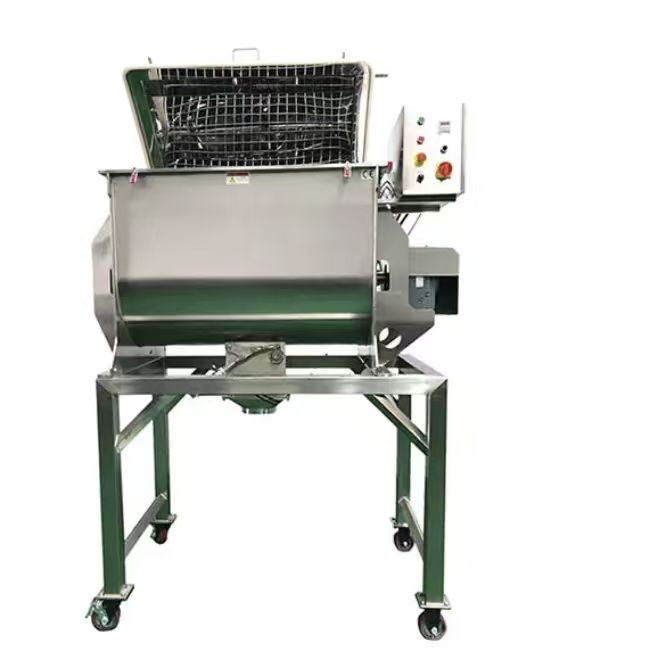
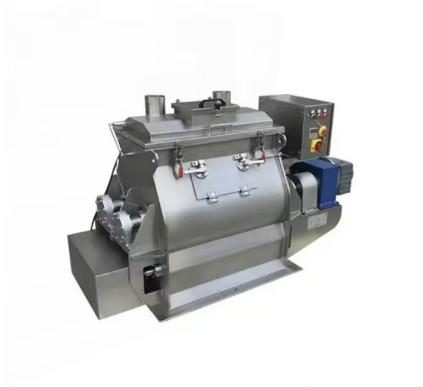
● Double shaft paddle mixer: Two counter-rotating shafts drive the paddles, subjecting the material to convective, shear, and diffusion mixing in an overlapping zone where a “weightless” state is created. This enables efficient, gentle, and rapid mixing.
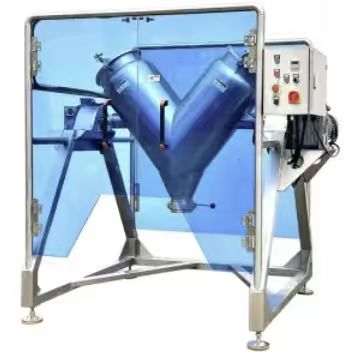
● Vmixer: By rotating the container, powders are continuously dispersed and recombined under the influence of gravity. This type is suitable for powders with good flowability.
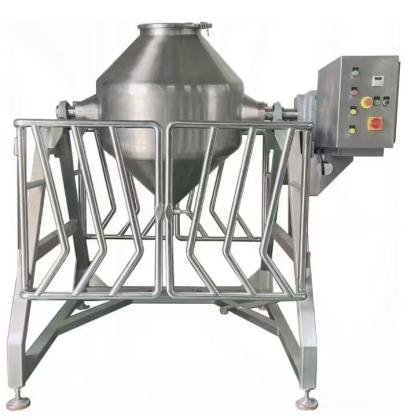
● Double cone mixer: Similar to the V mixer, it offers better sealing performance and is suitable for handling volatile substances.
There are many factors that can influence mixing performance, such as particle size, density differences, and electrostatic properties. When powders differ significantly in these characteristics, segregation is more likely to occur. Therefore, when selecting a dry powder mixer, it is essential to choose equipment that matches the material properties and process requirements.
In addition, mixing time is a key parameter. If the mixing time is too short, the powders will not be blended evenly. On the other hand, excessive mixing time may cause particle breakage and generate unnecessary heat.
Post time: Jun-06-2026