
During the daily operation of powder mixers, operators may encounter this puzzling question:
Why do some powders mix smoothly and efficiently, while others require strict temperature and humidity control? This often stems from a core concept that is easily confused—“dry powder” versus “dry chemical powder.” Although both appear as dry powders, from a strict materials science perspective, they have fundamental differences.
I. Definitions
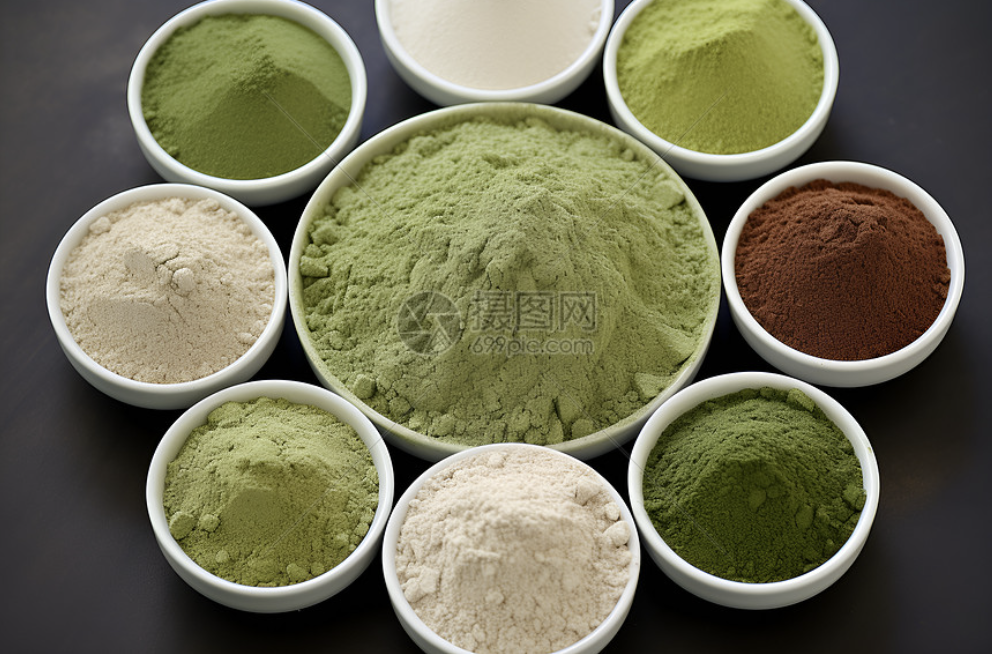
“Dry powder” is a broad term referring to industrial raw materials. In the fields of industry and powder technology, it refers to all materials that exist in the form of dry solid particles.
Such materials are widely found in daily industrial production, such as flour and milk powder in the food industry, pharmaceutical powders, as well as pigments and fillers in the chemical industry.
From the perspective of powder mixers, the core objective in processing these “dry powders” is typically to achieve physical uniform mixing. Mixing engineers mainly focus on factors such as particle size distribution, particle morphology, density, and flowability to ensure that different components do not segregate after mixing.
In contrast, “dry chemical powder” is a more specific and narrowly defined concept with clear chemical functionality and reactivity.
In the fields of engineering and fire safety, this term refers to a class of engineered powders designed through specialized chemical formulations. They are not only physical materials, but also functional substances with specific chemical purposes.
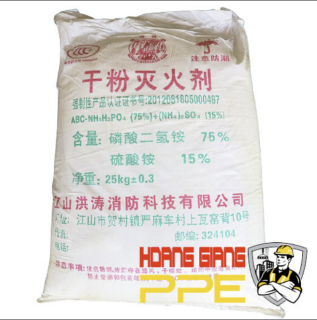
Their most typical application is as fire extinguishing agents. For example, ABC dry chemical powder is mainly composed of ammonium phosphate, while BC dry chemical powder is mainly composed of sodium bicarbonate. These powders are designed to undergo chemical reactions under specific conditions (such as exposure to fire) to suppress combustion.
II. Differences in Mixer Processing
For ordinary dry powders, the primary function of the mixer is to address physical blending behavior.
Operators need to adjust mixing speed and duration according to material properties such as angle of repose and bulk density, in order to prevent stratification after mixing. The goal is to achieve physical “homogeneity.”
The entire process is relatively flexible. Although environmental cleanliness, temperature, and humidity still need to be considered, there is generally no significant chemical risk involved.
For dry chemical powders, however, the challenges in mixing shift toward chemical stability and formulation accuracy.
When processing such powders, the objective is no longer simply mixing, but also:
● preventing unintended chemical reactions
● ensuring precise formulation ratios
● maintaining functional performance stability
For example, in fire extinguishing powder production, the ratio of ammonium phosphate to additives must be extremely precise. Even small deviations in composition may significantly reduce fire-extinguishing performance or render the product ineffective.
In addition, these powders are often hygroscopic and may exhibit certain corrosive or irritant properties. Therefore, mixing systems may need to be equipped with:
● high-performance dust sealing and leak prevention systems
● inert gas protection systems (when required)
● temperature control systems to reduce heat generated by friction during mixing
These measures help prevent caking, degradation, or equipment corrosion during processing.
III. Application Areas
This distinction is particularly evident in fire suppression applications.
In international standards such as NFPA classification systems, “dry powder” is typically used to refer to specialized extinguishing agents for Class D metal fires, while “dry chemical powder” generally refers to multipurpose extinguishing agents for Class A, B, and C fires.
However, in commercial and everyday contexts, because ABC dry chemical powders are the most widely used, the two terms are often used interchangeably.
Nevertheless, regardless of terminology differences, the fundamental principle remains consistent:
dry chemical powder is a functional material designed for specific chemical purposes, while ordinary dry powder is primarily a physical raw material used for blending.
Post time: Aug-12-2026